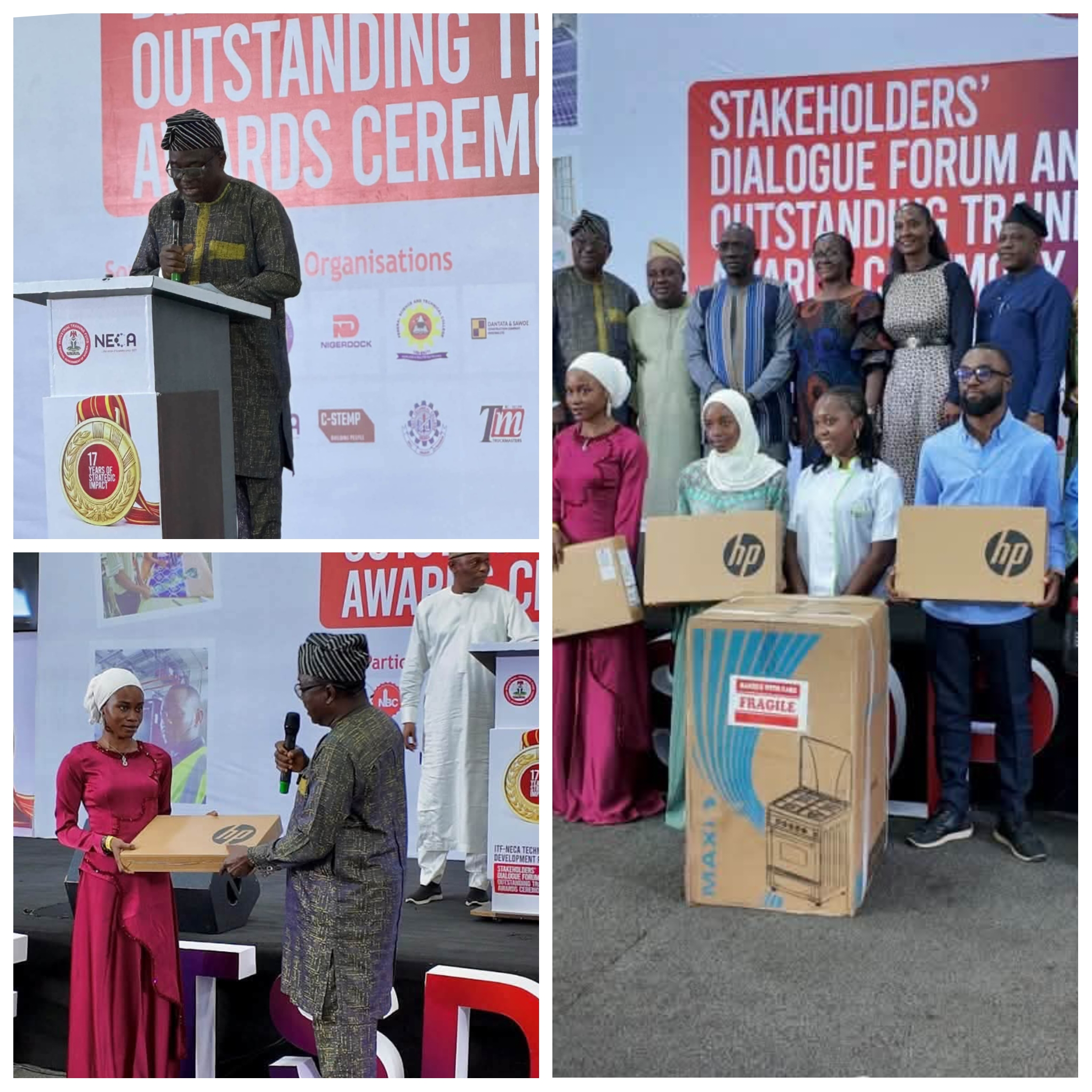
The Industrial Training Fund (ITF), in collaboration with the Nigeria Employers’ Consultative Association (NECA), has reaffirmed its commitment to bridging Nigeria’s skills gap and expanding employment and entrepreneurship opportunities for young Nigerians.
This commitment was highlighted at the 2026 ITF-NECA Technical Skills Development Project (TSDP) Stakeholders’ Dialogue Forum and Outstanding Performance Award Ceremony, held on Thursday, 22 October 2026, at the NAF Conference Centre and Suites, Abuja.

A major highlight of the forum was the announcement that over 87,000 Nigerians earned certification in practical Artificial Intelligence (AI) training within six months, following 101,000 registrations. The programme was implemented through the NECA-ITF platform in partnership with the International Organisation of Employers and Microsoft, demonstrating the potential of strategic partnerships to expand access to relevant, technology-driven skills.

Representing the Chairman of the ITF Governing Board, Hamma-Adama Ali Kumo, Mrs Mercy Oyewole emphasised that Nigeria’s industrial growth depends on a skilled workforce equipped to meet evolving industry demands. She called for stronger collaboration among government, employers and training institutions to ensure that skills development translates into meaningful employment, viable businesses and improved livelihoods.
In his remarks, NECA Director-General, Adewale-Smart Oyerinde, highlighted the enduring 17-year partnership between ITF and NECA as a model of public-private sector collaboration. He also identified the Standardised Vocational Training Programme (SUPA) as a key priority for the next phase of the initiative, aimed at improving artisans’ competence, professional standards and certification.

The dialogue reinforced the need for greater industry participation, improved training facilities, updated curricula, apprenticeships and enterprise support to ensure that Nigerians acquire the practical competencies required to thrive in the modern economy.
Through initiatives such as TSDP and SUPA, the ITF continues to advance its mandate of developing Nigeria’s human resource, strengthening workforce capacity and supporting national economic growth through demand-driven skills development.