Nigeria may potentially decrease its substantial malaria burden and save millions of naira spent on disease treatment annually by deliberately conserving bat populations.
A bat expert, Dr. Bennett Obitte made the submission during a virtual meeting commemorating the 2025 International Bats Appreciation Day.
He emphasized that as bats feed on mosquitoes that cause malaria, as well as other pests that facilitate disease transmission, conserving them was necessary to contain diseases, especially malaria, which is a major issue in the country.
International Bats Appreciation Day is celebrated annually on April 17th, to raise awareness about the important roles bats play in our ecosystem and to encourage appreciation for these often-misunderstood mammals.
Answering questions on whether or not bats offer any benefits to humans, Dr. Obitte, a Nigerian bat conservationist and PHD researcher in the US, highlighted that the bats are among the most economically vital animals playing lots of beneficial roles including feeding on mosquitos that spread malaria, thereby helping to control the disease scourge.
A report by the World Health Organization indicates that Nigeria carries a disproportionately large share of the global malaria burden, with an estimated 68 million cases and 194,000 deaths in 2021, representing nearly 27% of the global malaria burden.
Obitte also disclosed that bats feed on a host of other pests that transmit diseases, and their conservation would mean reducing the prevalence of those diseases in Nigeria.
“Mosquitoes are a big problem for us in Nigeria, and the reason why they are not overwhelming us is probably because of bats. Bats feed on mosquitos and other kinds of harmful vectors of diseases,” he posited.
He said that by feeding on insects, bats contribute greatly to pest control and, by so doing render agricultural services.
Obitte explained that, due to a lack of reliable data in Nigeria, the support that bats render to farmers in the area of pest control cannot be quantified, but in developed countries like the US where there is enough data about them, “bats save farmers millions of dollars every year by feeding on insects. They are suppressors of insects. One bat can eat as much as 500 to 1000 insects in one night,” he said.
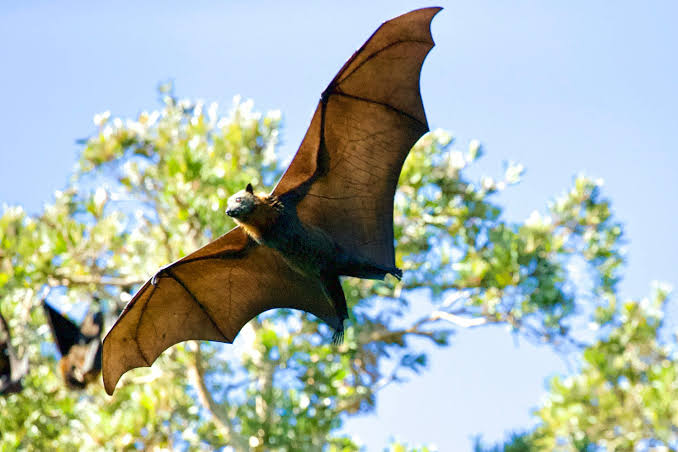
Explaining the usefulness of bats as pollinators and tree planters, he said that bats “bring lots of contributions to the forest. Bats are perhaps the most efficient seed dispersals like planters of trees. The reason why bats are efficient in tree planting is because of their feeding habits. There is a group of bats called the fruit bats. They feed on fruits. When they pick fruits, they don’t just hang around the trees; they fly with them and, in the process, disperse the seeds that germinate, growing into trees. Some of the bats fly hundreds of kilometers in just one night.
“Another important ecosystem service that bats render is pollination. Bats are the major pollinators of shear butter trees and other plants. These plants open at night. If they are not visited by bats, it means they will not fruit that year,” he submitted.
While stating that there are about 100 bat species in Nigeria spread across the length and breadth of the country, Obitte, however, expressed regret that a lot of them are threatened with extinction due to habitat loss, hunting for food, use in traditional medicine, and so forth. He, however, urged that conserving the animals should be accorded priority for the country to reap the enormous benefits that they offer to the ecosystem.
According to Obitte, to sustainably conserve the bats, there was a need to enforce environmental laws, especially those related to the protection of forests, noting that the nation has enough laws already, but the problem lies with enforcement.
He called for the conservation of natural ecosystems to enable the breeding of wild species, including bats, even as he advocated the protection of areas designated as protected, enforcing regulations that prevent illegal encroachment into them by hunters.
Obitte regretted a past incident in which hunters reportedly killed 4000 bats in one expedition in Cross River State, South-South Nigeria, saying that such should not be allowed and perpetrators should be penalized according to the law.
His words, “These bats have faced tremendous threats enough that scientists worry that we may be losing them completely.
The major reason bats are endangered in Nigeria is habitat loss and habitat degradation. Most bats depend on the forests and we have lost most of our forests across Nigeria. It’s just like bulldozing people’s houses and they are homeless.
“Logging, smallholder farming, and building of structures are three major areas leading to habitat loss, which is the main problem for bats.
“You are also taking away their food. Some of them depend on fruits and flowers, while others depend on insects. So when you are cutting down the forests, you are also affecting their food.
“In terms of hunting hunting is also a major problem, but the hunting only affects a group of bats, which are the bigger bats that are called the food bats. People hunt them mostly for food, especially in southern Nigeria. Hunting affects all bats that live in caves.
“There are also a few places where people use bats as materials for traditional medicine. That’s not a huge problem. The major problem is hunting. In Cross River State, there are places where we have reported hunters capturing up to four thousand bats in just one hunting effort. This is a huge problem for them. Imagine a cave that hosts fifteen thousand bats, and every time you go, catch five hundred to one thousand of them. It’s only a matter of time and they are exhausted,” he opined.
He harped on the importance of enforcing the nation’s laws and regulations for wildlife protection, observing that,” there are lots of policies for wildlife in Nigeria. There are laws establishing protected areas in Nigeria which, in my opinion, are the most important conservation work going on in the country. Protected areas are like national parks. You do not have to go into these places to harvest anything. The government has rangers who are armed and they patrol these protested forests to make sure people are not hunting in them or logging in these places.
“Beyond protected areas, there are also laws that prevent people from hunting specific animals that are endangered. You cannot go around and maybe start hunting a gorilla close to your home because it is not in the National Park. It is an endangered species, and the Endangered Species Act offers protection for them. You are not permitted to haunt an elephant. Some of these animals are endangered and protected by law,” he stressed.
The conservationist who stated that he has handled thousands of bats across nations and continents, dispelled the narrative of some people associating the bats with bad omens and witchcraft, which is partly blamed on the hate and hostility towards the animals.
He said, “I have handled 1000s of birds in Nigeria, other African countries, the US, and others. I have never seen a possessed one.”
Obitte has since 2012 dedicated himself to the conservation of bats in Nigeria, an initiative he said has yielded significant results.
“Part of the things we are doing to contribute to bats conservation is to deepen awareness and research on the species. Our organization, known as Small Mammals Conservation Organization, has been having community interventions. We have several interventions in Cross River and Edo States, and we have achieved significant impact across these areas.
“We are funding students, both postgraduate and undergraduate students, to do bat research and conservation so that over the next few years, we have more people doing bat work across Nigeria and West Africa. We are raising more scientists to be able to join in researching bats and bringing data that can be used to access them and mitigate whatever threats that they face.”
He, however, stated that lack of appropriate funding for research on the animals and low level of awareness, low capacity, limited knowledge of ecology, threats to bats, and inadequate enforcement have slowed down progress.
The convener of the media chat, Festus Iyorah, Nigeria Representative of Wild Africa, said that the meeting was necessary to leverage the power of the media to amplify awareness about bats. Iyorah believed that the virtual meeting which was joined by environment journalists from diverse media outlets in Nigeria, offered a lot about bats in Nigeria, as it provided insights about the species and the threats they face in the country.
He hoped that publications from the meeting would challenge the scenario of limited content on bats that have contributed to the extinction threat the animals have been facing in the country.
“The whole purpose of this conversation is to see how we can get the public to know the roles that bats play in the ecosystems, the threats that they face, and how we can help them. To most Nigerians, bats represent something different and they are currently facing threats in Nigeria. Journalists are the ones who bridge the gap between the public and experts. They get the messages in the simplest form that the public will understand,” remarked Iyorah.
Iyorah had in a release argued that “bats are among the most ecologically vital yet misunderstood animals in Nigeria and around
the world. Despite their essential role in maintaining healthy ecosystems, they face increasing
threats from misconceptions, habitat loss, and emerging disease narratives.”
” A Rich but Underappreciated Biodiversity, Nigeria is home to over 90 species of bats, making it one of the most bat-diverse countries in
Africa. These include fruit bats, insectivorous bats, and nectar-feeding species—each serving a unique purpose in the ecosystem. Yet, few Nigerians are aware of this biodiversity or its
benefits,” he added.