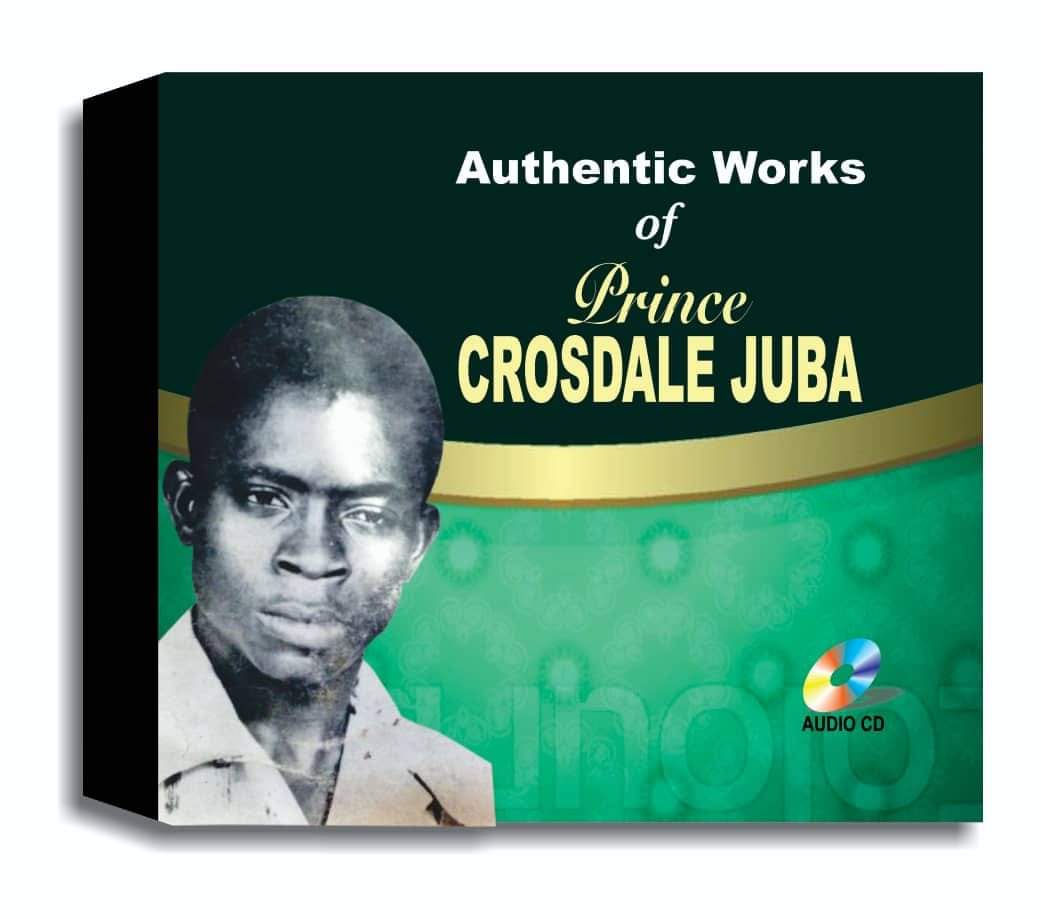
Prince Crosdale Moboluwaji Juba was born in the early 40s into the royal family of Oba Daniel Iksika Juba and Queen Marin Juba in Ilutitun Osooro, Okitipupa – a riverine area of South-Western Ondo State of Nigeria.
Crosdale began his musical career as a Brigade at St. Louis Local Authority School. He would go on to play with several bands across Nigeria including the much vaunted All Stars Band of Victor Olaiya. Juba joined Victor Olaiya’s All Stars Band and he was able to forge a headway with his Moribodo Highlife tradition. Victor Olaiya explored his repertoire to make his music more appealing. He also played with Adeolu Akinsanya's band and other great highlife musicians like Roy Chicago, Eddy Okonta and Rex Lawson.
Crosdale Juba started out professionally as a trumpeter with the Agundiade Star Dandies, Ado Ekiti before he left for a bigger group Comina Mend and Dynamite Ten, which was a Ghanaian band which played at the Empire Hotel, in Mushin and then later at Club 21 in Apapa.
Crosdale Juba’s music is little known and has neither enjoyed the wave of highlife nostalgia that tinged the 90s nor the new lease of life that classic records now enjoy with the popularity of streaming services.
London-based former band member, vocalist and trombonist Abdul Raheem says he remembers how Juba “played all instruments, drums, bass guitar, guitar, and saxophones. But he was famous with the trumpet and his voice, he can blow the trumpet. This was the time when Zeal Onyia and Eddie Okonta were reigning, he use[d] to play their music and play the trumpet exactly how it was played by Zeal [Onyia] and Eddie [Okonta].” Raheem was in Ghana playing with the Uhuru Dance Band in the mid-60s. When the band returned from a tour in Nigeria, they informed him that they had met a trumpeter called Crosdale and they thought he was a genius.
Music critic and Burna Boy’s grandfather, Benson Idonije, remembers fans flooding the dance floor when Crosdale Juba, trumpet in hand, took the microphone and performed music with “a voice like a nightingale”. Benson Idonije, said:” The popularity and the acceptance of Crosdale’s Moribodo’s music could be measured by the surging crowd that took to the dancing floor each time Juba crept towards the microphone to sing. With trumpet in hand, he sang with a guttural, glossy voice as he produced modern jazz sounds reminiscent of Mike Falana. His voice can be likened to that of a nightingale, especially with the tinge of Ikale dialect which allows the lyrics tumble out with immediacy and urgency. He was a man gifted with special ability among his contemporaries and the fire in him was just about to spread until death subjugate.”
Unlike juju exponent Tunde Nightingale, whose voice was nasal and high-pitched, Juba’s voice was mellow and occasionally close to a rasp. Alongside other Ikale musicians like Theophilus Iwalokun, Comfort Omoge and Remilekun Amos, Juba’s voice had a soothing and melodious quality that supports Idonije’s hypothesis that the most melodious singers in highlife were from the riverine areas.
Prince Crosdale Juba spent the greater part of his musical career playing with other bands. Juba ended up doing a number of releases for EMI and Eroya records that documented the vitality of his Moribodo sound. He spent only about three years of his life recording his own music.
As it is customary to christen one’s style of music as if it was a novel phenomenon, Juba called his band Moribodo System King, after his hometown. The band was later renamed ‘His Blue Echoes’, perhaps to underscore the bluesy style of his singing and as a tribute to his Yoruba forebear, IK Dairo, whose band was called Blue Spots.
Crosdale Juba recorded several LPs with Eroya Sounds and his discography of about 22 songs, an assortment of tunes exploring several themes. Agbe ni mase celebrates farming as a vocation while Me Ra Sowo Yi Akeke Se – a tribute to Ghanaian highlife band ET Mensah’s Tempos’ sound – features a memorable vocal delivery in his native Ikale dialect, his preferred language for singing.
The consensus around his most memorable song is divided. His medley Anamokeren, a delightful mid-tempo tune reflecting on in-law politics and existential angst is a strong contender. Ditto for the soulful orchestra masterpiece Waiye Iya which also explores the essence of life with the optimism of prayers.
Perhaps Juba was prescient about the short span of his life: his music was a robust way of cataloguing his experiences and anxieties. One of his best-known love songs was Olabisi Olomi, written for his eponymous partner at the time.
Beyond the sophisticated trumpet solos characteristic of Juba’s music and the pristine jazzy arrangements, there was also the bellowing and riveting groove of the bassline which will make new converts who fortuitously find his music in the dusty shelves of YouTube highlife playlists.
Crosdale Juba was a household name in the highlife circles. He was also favourite of party goers.
A lot can be said for how YouTube is at the forefront of providing a digital archive for obscure musicians. A search for Crosdale Juba on Apple Music draws discomfiting blanks. Ditto for Spotify which seems to have a compilation of Crosdale Juba’s songs that have not yet been cleared for streaming.
Crosdale Juba was not exempt from the fast life that lured many musicians down the rabbit hole of substance use. Abdul Raheem, who played with him in several bands in Lagos and Enugu, says he remembers that “he drinks and smokes cannabis a lot.”
Juba, died in a mysterious circumstance on December 9, 1976 at 37 years. The myth around Juba’s death on 9 December 1976 is that he was poisoned. Raheem who saw him a day before his death says he was drinking a lot and even had a bottle of Teacher’s gin as he boarded a vehicle that was to take him to Akure. The next day, he was reported to have vomited blood and died.
In the absence of a published coroner’s report, conjectures hold sway. The most educated guess is that he may have died from alcohol abuse.
More than four decades after his passing, Juba’s music continues to be a source of pride for the Ikale people and a regular fixture at their social events. However, this provincial adoration has not travelled as far.
Assuredly, his delight is contagious, but the jury is still out on when Crosdale Juba, Ikale’s finest trumpeter, will get his post-humous break.
PK Mogaji page