BY OJO OYEWAMIDE
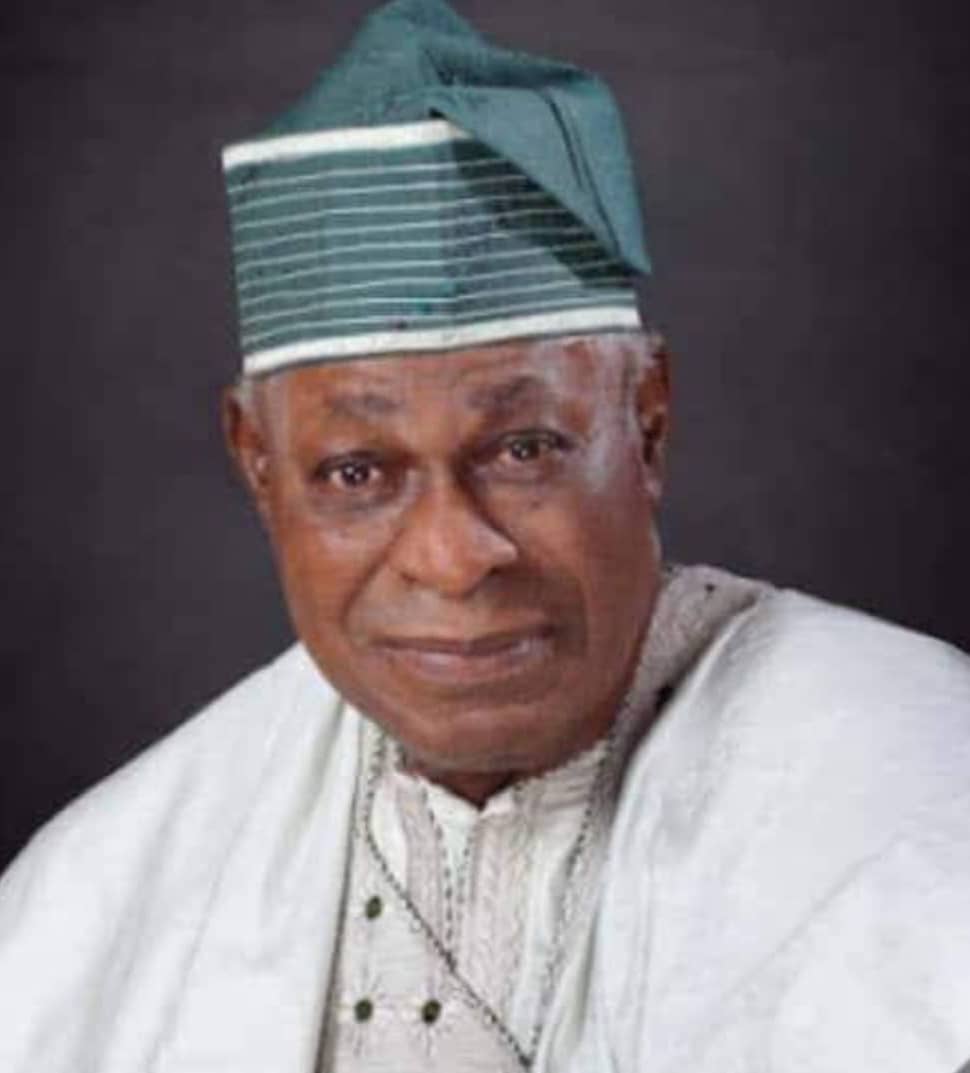
Prince Emmanuel Oluwole Adegboro, who passed on a couple of days ago, was a prince of Akure Kingdom, student union leader, soldier, administrator, politician, author and publisher. Death is unavoidable, and no earthly power can make it evitable. Our forefathers tried it with GBEKUDE (Hang death). But the ancient charm could not hang death for ever. It could only keep death at bay for a while. So, we knew Prince Adegboro would not be on this side forever.
But the suddenness and unexpectedness of his death at the time it occurred majorly accounted for the amount of shock it elicited. He was said to have driven his car out the day he passed away. Death opted for the darkness of the night to stealth on him and inflict its stings. It was at a time Prince Adegboro could not be rescued from its grip.
Prince Adegboro was ever conscious of his royal blood. One could notice royalty in the manner he walked and talked. He developed a sense of duty to seek a better society very early in life. And it was this sense that prodded him into student unionism and activism. During his schooling days, he held various student leadership positions. He led Nigerian students as the National President of the defunct National Union of Nigerian Students (NUNS) from 1971 to 1972.
There is a sense in which one can suggest that activism flows in his family's blood. His late younger brother, Banji Adegboro, widely known then as Tamale, followed his footsteps in student unionism and activism. Tamale was the president of the Students Union Government (SUG) of the University of Ibadan (UI) in 1975/76. His radicalism was too hot for the authorities of the university to handle. That was why he was expelled from the premier institution.
Tamale was later admitted into the University of Ife (UNIFE), now Obafemi Awolowo University (OAU), with a condition that he would not participate in student unionism. The condition was akin to asking a dog not to eat bones. Impossible! But death eventually robbed the country and humanity of his service and contributions when he lost his life in a ghastly auto-crash. Till today, Tamale's enviable record as a student leader has not been eroded by the passage of time.
After his university education, Prince Adegboro joined the Nigerian army. But in 1978, he retired from the military as a captain. He thereafter jumped into the murky waters of the Nigerian politics. He was a member of the defunct Unity Party of Nigeria (UPN). He also had a stint at the Federal University of Technology, Akure, (FUTA) as an Assistant Registrar.
He could not resist the lure of politics when the Ibrahim Babangida regime commenced its deliberately prolonged and dubious transition to civil rule programme in 1986. The programme failed. Instead of transiting to civil rule, Nigeria transited into crisis. In 1987 or thereabouts, Prince Adegboro resigned his FUTA appointment so that he could fully participate in politics, a decision he later regretted.
Our paths crossed in 1987 when he led a group of Akure politicians one could then describe as new breed. Among them were Dr. Tayo Bada, Engr. Olumuyiwa Ogunleye, Late Dele Johnson, Late Olu Eke and my late elder cousin, Pastor Julius Ojo Olaribigbe, known as The Boy, to mention a few. The group fielded its members in the year's zero-party local government elections. Dele Johnson was its candidate for the chairmanship of the old Akure Local Government Area. Johnson defeated Baba Akin Adegbulu and Baba Fatoyinbo, who was believed to be the choice of Pa Reuben Fasoranti and other old and established Akure politicians then.
Also, Olu Eke, Pastor Olaribigbe and Engr. Ogunleye won their elections as councillors of their wards. This writer was among the young, budding politicians who worked for the victory of the candidates of the group in Isolo/Oshodi Ward 3, now Ward 10. Others were Sunday Omojowo (Monaco), Sunday Ayejina (Natty), Temidayo Philip Adebayo (Iyanu), the late Adekunle Akinsulu, Olusola Adejuyigbe (Olotiun) and some others I can no longer remember. It was one of the meetings of the group at the Odokoyi residence of Pastor Olaribigbe that we were introduced to Prince Adegboro. After the election of Pastor Olaribigbe as councillor of our ward, the likes of Idowu Yusuf (Ekukuseku), High Chief Wemimo Olaniran, who is now the Sapetu of Ijare, and Samuel Babayemi joined us.
However, the group failed the test of time. It began to fall apart when it came in contact with conflict of interests and political intrigues. First, Prince Adegboro was interested in representing Akure at the constituent assembly to be created by the Babangida regime. Engr. Ogunleye, who had been elected as councillor of Gbogi/Isinkan Ward 4, now divided into Gbogi/Isinkan Ward 2 and Ward 3, also showed interest in the membership of the assembly. The councillors were the electors and Engr. Ogunleye had swayed a considerable number of them to his side.
But Engr. Ogunleye had to resign his position as councillor. He tendered his resignation letter, but Dele Johnson, the council chairman, did not approve it. Because of this, Engr. Ogunleye could not participate in the election into the constituent assembly, paving the way for Prinçe Adegboro to be elected unopposed. If you like, call it a political strategy. By the time Engr. Ogunleye came back to resume his position, Dele Johnson had approved his resignation. That was why the then Gbogi/Isinkan Ward 4 did not have a councillor throughout the life of the council.
Prince Adegboro was one of the 566 members of the constituent assembly which began work on the 1989 constitution on May 11, 1988. The assembly was a fertile ground for the formation of political groupings expected to transform into political parties. Prince Adegboro was among those who formed the defunct Liberal Convention (LC), which he brought home to introduce to us, his supporters. The membership of the LC included a number of millionaires. Prince Adegboro was the national vice chairman. In Ondo state, the late Dr. Kayode Faloye was the state chairman while Mr Tunde Omojuwa, now a CAC pastor, was the chairman of the Akure chapter. Idowu Yusuf was the chairman of Ward 3, now Ward 10, and this writer was the secretary.
The Babangida regime failed to register any of the political groupings. Instead, it created the defunct Social Democratic Party (SDP) and the National Republican Convention (NRC). The following day the creation of the two political parties were announced to the nation, Prince Adegboro invited his supporters to his Oba-Ile residence, where he announced his decision to join the SDP. His decision was not accepted by all his followers. Some followed him to SDP while others went to NRC.
In 1991, Prince Adegboro supported Dr. Kunle Olajide for the gubernatorial nomination of the SDP. Olajide contested the party's ticket against the late Evangelist Bamidele Olumilua, Chief Ayo Akinyemi, Prof. Opeyemi Ola and Senator David Oke. But the race was between Olumilua and Akinyemi whom Chief Omotayo Alasoadura nursed the ambition of deputising then. Olumilua clinched the ticket with the support of the late Pa Adekunle Ajasin and that of the SDP state chairman, the late Chief Blessing Kayode.
During the late Sani Abacha era, Prince Adegboro opted for the National Centre Party of Nigeria (NCPN), one of the five registered political parties described by the late Chief Bola Ige as five fingers of a leprous hand. Local government elections were contested by the five political parties on March 15, 1997. Prince Adegboro ensured that the councillorship candidate of the party in his Gbogi/Isinkan 1, Dare Adeniyi, won. The story of Adeniyi's victory is an interesting one. It is better told by Adeniyi himself and his friend, Ojo Ajila. The story is a testimony to how strategic Prince Adegboro was. The NCPN chairmanship candidate, Elder Daisi Oluyi, nearly defeated Otunba Omolade Oluwateru of the Democratic Party of Nigeria (DPN) in the election.
When Abacha died and another transition to civil rule programme started, Prince Adegboro joined the Alliance for Democracy (AD), where he played a key role in the emergence of the late Baba Adebayo Adefarati as governor of Ondo state in 1999. Political intrigues deprived him of the position of the Secretary to the State Government (SSG) that was promised him before the election. Nevertheless, he was able to influence the appointment of a number of his followers into some positions in the government. Among the beneficiaries were Hon. Ajibola Owoeye, Pastor Olaribigbe, Hon. Sunday Kekereowo and the Late Chief Famotua. Prince Adegboro was also, at various times, a board member, Special Adviser and commissioner in the Adefarati government.
He had a group within the Alliance for Democracy called SODEDERO. The group was formidable in Akure. Its chairman was the late Hon. Segun Omotoso. Chief Famotua was the deputy while my friend, Adebayo Philip Iyanu, was the secretary. In 2006, he sought the nomination of the Action Congress (AC) to contest for the state governor in the the 2007 elections. He couldn't get it. But the manner in which Prince Ademola Adegoroye secured the AC's governorship ticket irked him and some other aspirants including Dr. Dare Bada. They left the party for the Peoples Democratic Party (PDP). When the All Progressives Congress (APC) was founded, Prince Adegboro retraced his steps back to the fold of the progressives where he was till his death.
Throughout his adult life, Prince Adegboro was in deep romance with politics. And the motivation was his unquenchable quest for a better society. One will not be wrong if one holds the view that he gave to politics more than he got from it. It is well with his soul.
Ojo Oyewamide writes from Abibirih Lane, Isolo, Akure.